

The Top Ten Documents Your Expert Will Request and Why
Hiring an engineering expert shouldn’t be an arduous task, although sometimes the process may seem overwhelming. Usually the claim is at the point where you want answers yesterday but because of resourcing, workloads, or budgets you are in a time crunch to find them. Even if you are not initially intending to use the services of an expert, gaining access to certain portions of data during discovery is a proactive way to ease trouble or scrambling down the road. Whether it’s for a third party opinion, an independent design, a mediation statement, or a testifying expert, the engineer you hire will likely need information from the sources discussed below.

Beware of the Gray to be Green
As companies strive to improve energy consumption, promote environmental responsibility and improve the use of sustainable fuel sources to either generate revenues or improve their bottom lines the risks are not always in the determination of capital budgets, project scheduling or execution but in the gaps between technology unit operations. Renewable energy facilities can have a dozen or more process unit operations, each with proven technologies yet at the unit interfaces the process can break down leading to reduced efficiencies, higher than expected start-up costs and lost profits.

How Forensic Engineers Help with Building Diagnostics
Whether you’re looking at residential or commercial constructions, thorough analysis is always needed to assess damages and understand underlying faults within the structure.

Comparative Solar System Performance Analysis
Preliminary Analysis of an Industrial Photovoltaic System and Comparison of Its Performance with a Wind Energy System and a Fuel Cell Power System The purpose of this article is to test the feasibility of installing a Photovoltaic (PV) System on an industrial facility...
No Damage For Delay
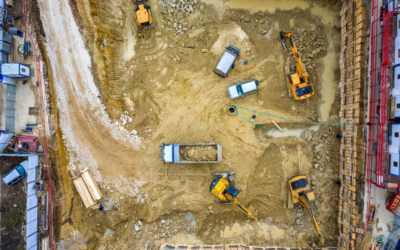
A no-damage-for-delay clause attempts to contractually bar recovery by a contractor or subcontractor in the event project delays result in damages or extra costs.
MDC Systems® Presents Advanced Engineering Project Management Course at Engineers’ Club of Philadelphia, Sept. 20, 2013
PM-2: Advanced Engineering Project Management: Avoiding Project Failure Friday, September 20, 2013, 7:45 am - 4:00 pm Engineers Club of Phildelphia This seminar is intended for engineers whose duties require the application of Project Management Principals to Program...
What Standard? Under Whose Care?
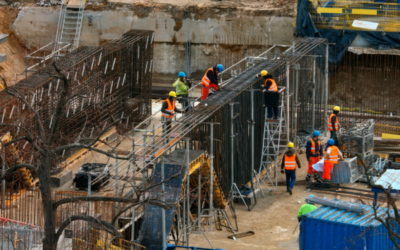
Can a Designer or Owner shift responsibility for design errors and omissions by requiring an enhanced effort for construction coordination drawings by contractors?
To answer this question we will recount an example project that was bid as Design-Bid-Build where the fundamental element of the dispute was design defects with regard to spatial arrangement and sizing of system features.
Real Risk Management – Read the Contract
Construction is as timeless as the pyramids. As a result, the most common construction risks have already been identified and allocated in the terms and conditions of standard form contracts. These are published by a multitude of professional associations such as the Construction Management Association of America (CMAA) and the American Institute of Architects (AIA). This article discusses the practical aspects of risk management and how to convert a potential problem to work to your advantage.

Home Office Overhead (HOOH)
Most of those working in the construction contract claims business are familiar with 1960 decision by the Armed Services Board of Contract Appeals (ASBCA) in the Eichleay Corporation Case which recognized a contractor’s right to recover unabsorbed home office overhead for owner caused delays and work stoppages.
Risk Reduction with Effective Critical Path Method (CPM) Schedules
The purpose of the Critical Path Method (CPM) schedule (A scheduling technique whose order and duration of a sequence of task activities directly affect the completion date of a project)is to assist in the cost effective management of the project, anticipate problem areas, and allow the project team to mitigate the impact of unforeseen conditions. What a tool! Without this tool, the project management team is simply reacting to a crisis of the moment and their hurried reaction may exacerbate an already difficult project by doing harm in the response to the disaster of the moment.